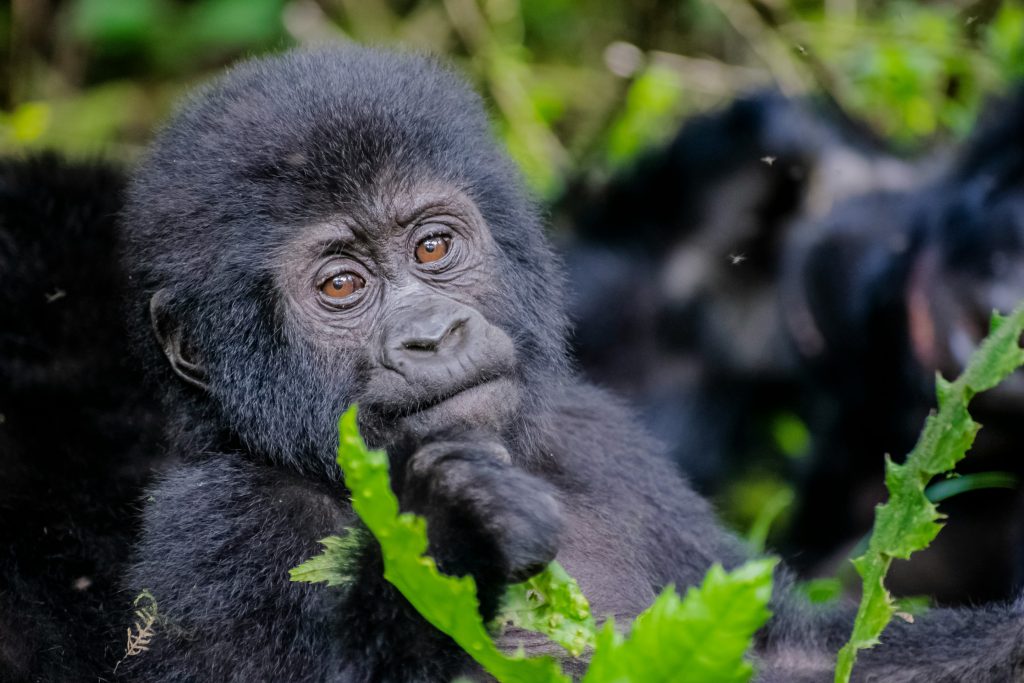
The Democratic Republic of the Congo is currently managing the second-largest Ebola outbreak ever recorded. WHO’s own reporting names fruit bats and non-human primates among its suspected sources. Long before this outbreak began, the clearest early warning of Ebola’s presence in a landscape has often come not from a hospital, but from a dead gorilla.
On 15 May 2026, the Democratic Republic of the Congo’s Ministry of Public Health declared the country’s seventeenth Ebola outbreak, this time caused by Bundibugyo virus, a species of Ebola virus for which no licensed vaccine or specific therapeutic yet exists. Two days later, the WHO Director-General determined that the outbreak, which had also produced cases in neighbouring Uganda, met the criteria for a Public Health Emergency of International Concern. By 26 August 2026, the outbreak had grown to 5,794 confirmed cases and 2,786 deaths across six provinces and 60 health zones, a case fatality ratio of 48 percent, making it the second-largest Ebola outbreak on record. Uganda, by contrast, declared its own outbreak over on 28 July 2026 after 42 days without a new case, showing what rapid, well-resourced containment can achieve when it happens early enough.
WHO’s outbreak reporting is explicit about the zoonotic origin of these events: fruit bats are suspected to be the natural reservoir of Bundibugyo virus, and human infection typically begins through close contact with the blood or secretions of infected wildlife, including bats or non-human primates, before amplifying through person-to-person transmission. That detail is easy to read past in a situation report. It should not be, because it points to a surveillance gap that has existed for as long as Ebola has been studied — and to a set of victims who rarely appear in outbreak statistics at all.
Great apes have paid the heaviest non-human price
Ebola is not only a human disease. Case fatality in wild gorillas infected with Ebola virus is estimated at around 95 percent, and in chimpanzees at around 77 percent — rates comparable to, or worse than, those seen in the worst human outbreaks. Researchers led by Magdalena Bermejo found that Ebola killed roughly 5,000 gorillas at the Lossi sanctuary in the Republic of Congo during outbreaks in 2002 and 2003 alone, with mortality among individually known gorillas reaching 93 to 95 percent across an area of several thousand square kilometres. Taken together with the effects of hunting, Ebola outbreaks are estimated to have contributed to the deaths of roughly a third of the world’s gorillas and chimpanzees since the 1990s, prompting warnings from primatologists including Peter Walsh as early as 2003 that, without urgent intervention, Africa’s great apes faced being pushed to the brink across large parts of their range.
Those figures are not a historical footnote. Great apes are already endangered or critically endangered across most of their range, and a disease capable of killing the large majority of individuals it infects is an existential threat layered on top of habitat loss and hunting pressure. Ebola in great apes is a conservation crisis in its own right.
Ape die-offs have repeatedly preceded human outbreaks
It is also, distinctly, a public-health signal. Great apes appear to act as an amplifying or bridging host between the suspected bat reservoir and human populations, most often through contact during hunting, butchering or consumption of bushmeat. Because that transmission pathway typically passes through wildlife before it reaches people, unusual wildlife mortality has on multiple occasions been detected in the same landscapes as subsequent or concurrent human Ebola outbreaks in Gabon and the Republic of Congo, giving field researchers and local communities an earlier signal than clinical case reporting alone would have provided. A surveillance system built to notice a cluster of gorilla or chimpanzee carcasses in the forest is, in effect, watching the same event from further upstream than a system that only starts counting once patients arrive at a clinic.
That is precisely the argument now being made for treating wildlife mortality monitoring as core public-health infrastructure rather than a specialist conservation activity running in parallel to it.
Why surveillance stops at the hospital door
Human disease surveillance is, understandably, built around the institutions that treat human disease: clinics, hospitals, national reference laboratories, notifiable-disease reporting systems. That architecture is good at what it was designed to do, but it structurally cannot detect a pathogen before it has already infected a person. We have made a version of this argument before about mosquito surveillance in Britain: the most useful part of a biosecurity system is often the part working before there is anything for a hospital to see, and that is what prevention looks like before the emergency. Newer forms of digital and open-source epidemic intelligence extend that principle further upstream still, and AI is already watching for the next outbreak using exactly this kind of signal, well before it reaches a hospital surveillance system. Wildlife mortality monitoring belongs in the same category: a source of information generated at the point where a pathogen first crosses from an animal reservoir toward people, rather than after it has finished doing so.
ZOOSURSY and the institutional response
Some of that upstream capability is now being built out at scale. The World Organisation for Animal Health’s ZOOSURSY project, launched in October 2024 and funded by the European Union through its Global Gateway initiative, extends the scope of its predecessor programme, EBO-SURSY, which focused specifically on Ebola and bat-borne disease surveillance across ten countries in Central and West Africa. ZOOSURSY covers 17 countries across Central, West, Eastern and Southern Africa, broadening both its geographic reach and its thematic scope to a wider range of emerging and re-emerging zoonotic diseases at the human-animal-environment interface, alongside training, scholarships and legislative advocacy intended to make that capability durable rather than project-limited.
That expansion matters for exactly the reason this outbreak illustrates: a surveillance gap in any one of the countries at that interface is effectively a gap for the whole region, since neither bats, nor apes, nor the pathogens they carry recognise the administrative boundary at which one country’s wildlife-monitoring budget happens to end and another’s begins.
The governance problem behind the surveillance gap
None of this is simply a technical or financial afterthought. We have argued elsewhere that the law itself has a One Health problem, in the sense that legal and institutional structures built around single sectors struggle to assign clear responsibility for risks that begin in wildlife, cross into livestock or people, and only then trigger a recognisable regulatory response. Wildlife disease surveillance sits awkwardly across environment ministries, wildlife authorities, agriculture departments and health ministries, frequently without a single institution clearly responsible for funding it, interpreting it, or escalating it when something unusual is found.
That institutional awkwardness compounds a familiar economic problem. Successful wildlife surveillance that detects an unusual die-off, triggers an investigation and helps prevent a spillover event is, by design, invisible: no outbreak occurs, no emergency response is required, and the counterfactual it prevented is never observed. That is the same prevention paradox we have described in the context of pandemic financing more broadly — the clearest evidence that a system worked is usually the absence of a story, which makes it structurally difficult to fund relative to the visible, urgent costs of an outbreak already under way. The DRC’s current outbreak, already the second-largest Ebola event ever recorded, is a considerably more expensive way to learn that lesson than a well-resourced wildlife-monitoring network would have been.
Great apes cannot advocate for the surveillance systems that would protect them, or for the funding that keeps those systems running between outbreaks rather than only during them. But the pattern connecting a dead gorilla in a Congolese forest to a hospital ward in Uganda has now been documented for more than two decades. Treating that pattern as a genuine early-warning system, rather than an anecdote discovered after the fact, is one of the more concrete steps available to reduce how often outbreaks like the current one in the DRC are allowed to reach the scale they have.
Questions & Answers
Does Ebola actually infect great apes, or only humans?
Ebola infects both. Case fatality in wild gorillas is estimated at around 95 percent and in chimpanzees at around 77 percent, and Ebola outbreaks are estimated to have killed roughly a third of the world’s gorillas and chimpanzees since the 1990s, alongside the effects of hunting.
How many gorillas has Ebola killed?
Researchers led by Magdalena Bermejo estimated that a single set of outbreaks in 2002 and 2003 killed roughly 5,000 gorillas at the Lossi sanctuary in the Republic of Congo, with mortality among individually known gorillas reaching 93 to 95 percent across a much wider area.
Can gorilla or chimpanzee die-offs actually predict human Ebola outbreaks?
They have done so on multiple documented occasions in Gabon and the Republic of Congo, where unusual ape mortality was detected in the same landscapes as subsequent or concurrent human outbreaks. Great apes appear to act as an amplifying host between the suspected bat reservoir and people, often via bushmeat contact, which places ape die-offs earlier in the transmission chain than human clinical cases.
What is happening with Ebola in the DRC right now?
The DRC declared its seventeenth Ebola outbreak, caused by Bundibugyo virus, on 15 May 2026. WHO declared a Public Health Emergency of International Concern on 17 May 2026. As of 26 August 2026 the outbreak had reached 5,794 confirmed cases and 2,786 deaths across six provinces, a 48% case fatality ratio, making it the second-largest Ebola outbreak ever recorded.
What is ZOOSURSY?
ZOOSURSY is a World Organisation for Animal Health (WOAH) project, funded by the European Union through its Global Gateway initiative, launched in October 2024. It extends an earlier Ebola- and bat-focused programme (EBO-SURSY, ten countries) to 17 African countries and a broader range of zoonotic disease threats at the human-animal-environment interface.
Why doesn’t ordinary public-health surveillance catch this earlier?
Human disease surveillance is built around clinics, hospitals and notifiable-disease reporting, which means it can generally only detect a pathogen after it has infected a person. Wildlife mortality monitoring can, in principle, detect the same event earlier, at the point where a pathogen first moves from its animal reservoir toward people.
Why is wildlife disease surveillance chronically underfunded?
Partly institutional: responsibility for wildlife health surveillance is typically split across environment, wildlife, agriculture and health authorities, often without one body clearly accountable for funding or escalating it. Partly economic: successful surveillance that prevents a spillover event produces no visible outbreak and no obvious success story, which makes it structurally harder to fund than emergency response to an outbreak already under way.
References
- World Health Organization (2026). Ebola disease caused by Bundibugyo virus – Democratic Republic of the Congo. Disease Outbreak News, 28 August 2026 (data as of 26 August 2026).
- World Health Organization (2026). Ebola disease caused by Bundibugyo virus – Democratic Republic of the Congo. Disease Outbreak News, 21 May 2026.
- World Health Organization (2026). Ebola outbreak – DRC 2026.
- Bermejo, M. et al. (2006). Ebola Outbreak Killed 5000 Gorillas. Science, 314(5805), 1564.
- Walsh, P.D. et al. (2003). Catastrophic ape decline in western equatorial Africa. Nature, 422, 611–614.
- Leendertz, S.A.J. (2016). Testing new hypotheses regarding ebolavirus reservoirs. Mammal Review, 47(2), 98–111.
- World Organisation for Animal Health (WOAH) (2024). WOAH launches ZOOSURSY, a new disease surveillance project.
- World Organisation for Animal Health (WOAH), Sub-Regional Representation for Africa. ZOOSURSY Project: Enhancing Zoonotic Disease Surveillance in Africa.
Key Takeaways
- The DRC's current Bundibugyo virus disease outbreak, declared 15 May 2026, is now the second-largest Ebola outbreak ever recorded — 5,794 confirmed cases and 2,786 deaths as of 26 August 2026, a 48% case fatality ratio, and WHO identifies fruit bats and non-human primates among the suspected sources of spillover.
- Ebola is not only a human disease: case fatality in wild gorillas is estimated at around 95% and in chimpanzees around 77%, and Ebola outbreaks are estimated to have killed roughly a third of the world's gorillas and chimpanzees since the 1990s.
- A single outbreak at the Lossi sanctuary in the Republic of Congo (2002-2003) killed an estimated 5,000 gorillas, and ape die-offs have repeatedly been detected before nearby human outbreaks were confirmed.
- Human surveillance systems are built around hospitals and clinics, which means they typically detect Ebola only after it has already crossed into people — wildlife mortality monitoring offers an earlier warning window that remains chronically underfunded relative to clinical surveillance.
- WOAH's ZOOSURSY project, launched in October 2024 and funded by the EU through Global Gateway, expands on its Ebola-focused predecessor (EBO-SURSY, 10 countries) to cover 17 African countries and a broader range of zoonotic threats at the human-animal-environment interface.
- The same prevention paradox recurs here as elsewhere in biosecurity: successful wildlife surveillance that prevents a spillover event is invisible by design, which makes it structurally difficult to fund relative to visible outbreak response.