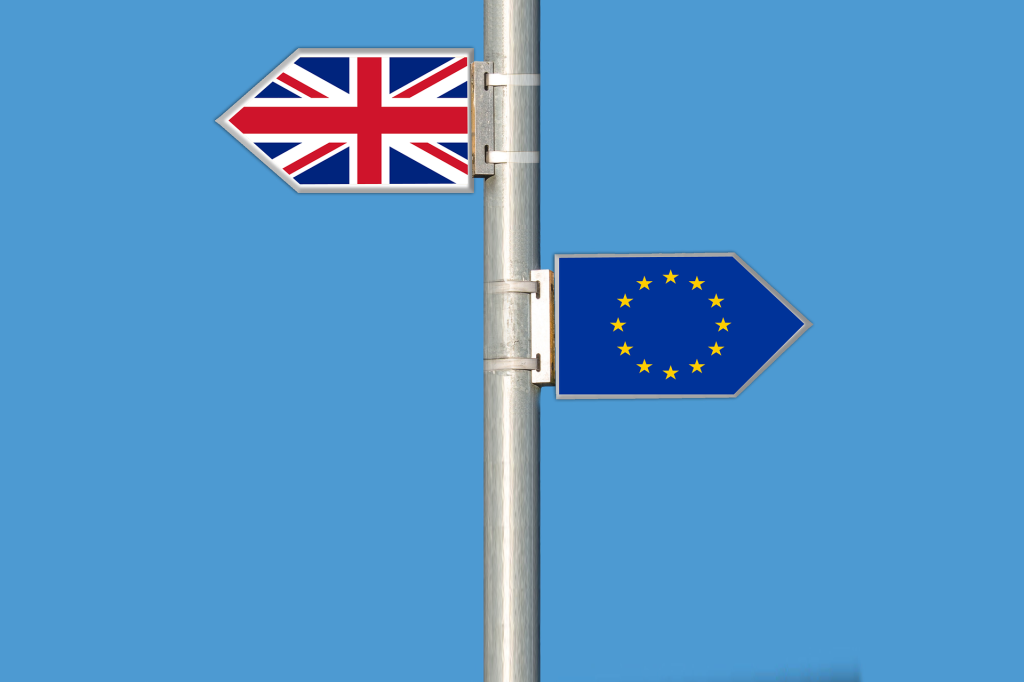
What Europe’s animal-disease pressure means for the UK after Brexit — a governance question, not a constitutional one.
Europe’s current animal-health problems do not stop at the English Channel.
Foot-and-mouth disease, highly pathogenic avian influenza, African swine fever, bluetongue and other transboundary animal diseases are being managed through different control programmes across Europe, placing pressure on veterinary services, diagnostic laboratories, surveillance systems, farmers and public authorities. The United Kingdom now sits outside the European Union’s institutional architecture for managing many of those risks. It does not, however, sit outside the biological system in which they occur.
Wild birds continue to migrate; midges continue to travel with weather systems; animals and animal products continue to move through international trade; lorries cross borders; and people travel between farms and countries. Pathogens remain indifferent to the constitutional arrangements governing the territory into which they arrive. That makes animal-health preparedness after Brexit a genuinely interesting One Health Security problem — and one this analysis approaches as a question of systems and governance rather than of politics.
The question is not whether leaving the European Union made Britain safer or less safe from animal disease; that framing would be far too simple, and it is not the argument here. The more useful question is whether the UK’s post-Brexit architecture can obtain the information, maintain the capacity and make the decisions necessary to manage biological risks that remain deeply interconnected with those of neighbouring countries. That question has become increasingly important as animal-disease pressure across Europe grows.
Biological geography did not change
Political borders can alter regulatory systems very quickly, but ecological geography changes considerably more slowly. The United Kingdom is separated from continental Europe by water, which provides a meaningful barrier against some routes of disease introduction, but it is not an isolated biological system.
The current bluetongue situation illustrates the point. Bluetongue virus is principally transmitted by Culicoides midges, so the emergence of BTV-3 in northern Europe was never simply a question of infected animals crossing a customs border — windborne movement of infected vectors creates an entirely different route of introduction. Britain’s current BTV-3 epidemic shows the consequence: by 25 August 2026, 630 premises had been confirmed with BTV-3 during the 2026–27 season (587 in England, 34 in Wales and nine in Scotland), while 2,459 potential cases were under investigation in Great Britain. No border inspection regime can inspect a midge.
Highly pathogenic avian influenza presents a similar problem from another direction, because migratory wild birds connect ecosystems across national jurisdictions and can move viruses through routes that have little relationship to commercial trade. African swine fever creates yet another pattern, moving through infected pigs and wild boar, contaminated materials and certain pork products, which makes biosecurity and human behaviour important alongside conventional border controls. Different diseases therefore encounter the UK border in different ways, which means border policy can only ever be one component of animal-health security.
The border still matters
Recognising the limits of border controls does not make them unimportant. Great Britain now operates the Border Target Operating Model for sanitary and phytosanitary imports, under which live animals, germinal products and many products of animal origin are assigned risk categories that determine certification, documentary requirements and, where applicable, identity and physical checks. Live animals imported from the EU are classed as high risk under the current model, as are germinal products such as semen, ova, embryos and hatching eggs.
The basic principle is sensible: controls should reflect the biological risk associated with the commodity rather than treating every consignment identically, and the system allows risk categories and inspection rates to change when the underlying disease risk changes. That capacity matters. When foot-and-mouth disease or another serious livestock disease appears in a trading partner, the relevant question is not simply whether existing rules are being followed — the system must be capable of recognising a changing risk environment and altering controls quickly enough to matter.
This is another form of governance latency. How long does it take for a disease event elsewhere in Europe to become a changed operational risk at the British border? The clock begins when the epidemiological evidence changes. It should not begin only when the paperwork catches up.
Britain needs European intelligence even when it controls its own border
This is one of the central post-Brexit animal-health challenges, because regulatory autonomy and epidemiological intelligence are different things. The UK can determine aspects of its own animal-health policy, import controls and disease-response arrangements, but effective risk assessment still requires timely knowledge of what is happening elsewhere. An outbreak hundreds of kilometres away may matter because of an animal movement, a commercial supply relationship, wildlife migration, vector dispersal, or the possibility that the pathogen is already more geographically widespread than confirmed cases suggest.
The value of European animal-disease surveillance to Britain therefore did not disappear with EU membership; if anything, the importance of rapid information exchange becomes more obvious when decision-making systems are institutionally separate. Inside a single regulatory system, information can move through established legal and operational structures; across two systems, somebody has to maintain the bridge. This is the difference between institutional independence and informational independence. The former may be a political choice. The latter would be a biological vulnerability.
The danger of duplicated visibility
There is a further potential problem. Britain and the EU can each possess sophisticated surveillance systems while still creating a gap between them. Imagine that an animal-health signal appears in an EU Member State: European systems assess the outbreak, map its spread and introduce control measures, while British authorities separately assess the potential risk to the UK and consider whether domestic controls need to change. Nothing about that arrangement is inherently ineffective.
The weakness appears only if information moves more slowly between the two systems than the biological threat moves through the environment or the commercial network. The danger, in other words, is not simply a lack of information — it is duplicated visibility without integrated situational awareness. Both sides may know a great deal; the question is whether the relevant information reaches the other side rapidly enough, and in a form that can be acted upon. That is particularly important for diseases where early intervention has disproportionate value, a theme explored in our analysis of what happens when surveillance systems connect but institutions do not.
The forthcoming SPS agreement changes the picture again
The UK–EU relationship is also moving. Following the May 2025 UK–EU Summit, the two sides began work towards a new sanitary and phytosanitary agreement covering the trade and movement of plants, animals, animal products, food and feed, with a stated ambition to conclude negotiations by early 2027 — though timing and content remain subject to the outcome of those negotiations. Under the arrangements set out in the Common Understanding, Great Britain would align dynamically with relevant EU rules across substantial areas of sanitary and phytosanitary regulation, so that as those rules change, the rules applying in Great Britain would generally update as well, subject to the final agreement and any agreed exceptions.
For businesses, much of the political attention understandably concerns trade friction, and fewer certificates, smoother movements and reduced administrative cost are tangible benefits. For One Health Security, however, there is a separate and more neutral question: could closer regulatory alignment also reduce animal-health governance latency? If the UK and EU are operating substantially aligned sanitary and phytosanitary rules, changing disease conditions may be easier to translate into compatible controls, certification and movement requirements. Alignment does not automatically create shared surveillance or joint operational capacity, but it can reduce the friction that arises when two systems describe and manage the same biological risk differently. The most valuable component of an SPS relationship, from a preparedness perspective, may therefore not be easier trade at all. It may be easier coordination during a biological incident.
Northern Ireland makes the system even more interesting
Any discussion of UK animal-health governance after Brexit has to recognise that there is not one simple UK regulatory geography. Northern Ireland occupies a distinctive position under the Windsor Framework, with access to both the UK internal market and the EU single market for relevant goods, and agriculture makes that particularly important. Northern Ireland’s livestock and food sectors have deeply integrated relationships with both Great Britain and the Republic of Ireland, so animals, animal products, processing capacity and veterinary medicines can sit within regulatory arrangements that differ from those operating in Great Britain.
That creates administrative complexity, but it can also create something valuable, because Northern Ireland effectively sits at the interface between two animal-health systems — and from a governance perspective, interfaces are often where weaknesses become visible first. Differences in certification, veterinary medicines, movement rules, disease-control requirements or data exchange can create friction there before they become obvious elsewhere. Northern Ireland should therefore not simply be treated as an awkward exception to the wider UK architecture. It can be treated as a sentinel for interoperability: if Britain and the EU cannot exchange animal-health information and operational requirements smoothly across the Irish dimension, that may indicate a broader coordination problem.
The real constraint may be capacity rather than rules
There is another lesson from Europe’s simultaneous disease pressures, explored in the companion analysis to this piece. A country can possess excellent contingency plans for several diseases and still struggle if multiple events occur at the same time, because veterinary epidemiologists, diagnostic laboratories, field officers, local authorities, policy teams and communications specialists are not infinitely expandable resources — and neither are border inspection facilities. The same people and institutions may be required for bluetongue surveillance, avian influenza investigations, an emerging foot-and-mouth threat and routine disease-control work.
This creates what we have described as response contention. Individually, each outbreak may sit comfortably within an established contingency plan; collectively, they can compete for the same response infrastructure. Brexit does not create this problem, but operating a national system outside the larger EU institutional structure makes domestic resilience especially important. Britain needs enough sovereign capability not merely to respond to one expected emergency, but to withstand several overlapping demands while still maintaining routine surveillance. Preparedness should therefore be measured in terms of surge capacity, not simply whether a contingency plan exists.
Laboratories are strategic infrastructure
This is particularly important for diagnostic capacity, because an outbreak response can rapidly generate very large numbers of samples. Bluetongue already illustrates what happens when suspicious clinical reports accumulate: thousands of potential cases can require assessment while confirmed cases continue to emerge. A different major livestock disease appearing at the same time could require separate diagnostic workflows, specialist reagents, trained staff and, potentially, containment facilities.
Laboratory capacity should therefore be considered strategic infrastructure in the same way as hospital surge capacity or emergency stockpiles. The useful preparedness question is not whether the laboratory can diagnose foot-and-mouth disease — it obviously can. The better question is what happens to national diagnostic throughput if foot-and-mouth disease appears while laboratories are already supporting major bluetongue and avian-influenza responses. That is a systems question, and it is the same lesson Britain drew, at great cost, from the 2001 foot-and-mouth epidemic and its effect on veterinary capacity.
Borders should become dynamic sensors
The Border Target Operating Model also creates an opportunity to think about borders differently. A border is conventionally imagined as a filter: something approaches, authorities assess whether it meets the required rules, and compliant goods pass through. For biological security, the border should increasingly function as a sensor as well. Import data can show changing trade patterns; inspection findings can identify unusual problems; certification information can reveal where animals and animal products originated; and disease intelligence can alter which consignments or commodities require greater attention.
The ideal border system therefore behaves dynamically, in a feedback loop: European disease intelligence informs a changing risk assessment, which drives targeted border controls, which generate inspection information, which updates the risk assessment again. That loop is more useful than either extreme of inspecting everything or assuming that paperwork alone provides adequate protection. Risk-based borders should learn.
Britain should avoid disease-by-disease infrastructure
The wider European experience also suggests that Britain should resist building completely separate infrastructure for every disease. Foot-and-mouth disease needs specialist procedures; bluetongue has a different epidemiology; African swine fever requires another control model; and avian influenza creates different interactions between wild birds, poultry and human occupational exposure. The diseases are genuinely different — but the supporting infrastructure overlaps enormously.
All of them depend, to varying degrees, on surveillance, rapid reporting, veterinary field capacity, laboratory diagnostics, genomic analysis, animal identification, movement data, geospatial analysis, risk communication, farmer engagement, compensation and economic policy, border intelligence, and rapid coordination between government organisations. Britain therefore needs strong cross-disease infrastructure underneath its disease-specific contingency plans. That is more resilient than repeatedly creating temporary systems around whichever pathogen is currently attracting attention.
A UK animal-health common operating picture
One practical improvement would be the development of a national animal-health common operating picture capable of showing significant threats simultaneously. This should not become another giant permanent database; instead, it should provide decision-makers with a shared operational view of current disease pressure — domestic outbreaks, European threat intelligence, wild-bird or wildlife signals, vector-risk information, import-risk changes, laboratory demand, veterinary field capacity and significant animal movements.
The important innovation would be that the system displays capacity alongside disease. It is not enough to know that three threats are increasing; decision-makers should also be able to see whether the resources required to respond to those threats are beginning to collide. A disease dashboard tells us what pathogens are doing. A resilience dashboard tells us whether the system can cope. Britain needs both.
Pre-agreed escalation with Europe
The UK–EU SPS negotiations create an opportunity to formalise something else: rapid animal-health escalation. Routine data exchange can continue through existing national and international mechanisms, but for certain high-consequence events, Britain and the EU could benefit from predefined triggers for enhanced technical exchange. A significant outbreak close to the UK, an unusual genomic finding, a major shift in vector distribution, or evidence of a disease appearing within a previously unaffected part of the supply network could trigger a temporary higher-information state.
Technical teams could then exchange relevant epidemiological, laboratory and movement intelligence rapidly, without waiting for every request to climb through conventional institutional channels. This is, again, visibility on demand: the systems remain separate during normal operation and become more permeable when the biology justifies it.
Treat the veterinary workforce as preparedness infrastructure
There is also a less technological requirement, because animal-health systems ultimately depend on people. Farmers produce many of the first signals; private veterinary surgeons recognise suspicious disease; the Animal and Plant Health Agency and devolved-government veterinarians investigate; laboratory scientists identify pathogens; epidemiologists reconstruct transmission; officials translate evidence into controls; and border staff implement changing requirements. A country can possess sophisticated legislation and excellent digital systems while remaining vulnerable if it does not have enough skilled people to operate them during simultaneous outbreaks.
Workforce planning therefore belongs within biological preparedness. Britain should periodically exercise not simply whether each disease contingency plan works, but whether several can operate concurrently — asking how many field investigations can be supported, how laboratory throughput changes under competing demands, which specialist roles become bottlenecks, and how long those capabilities can be sustained. This is where the European problem becomes particularly relevant: if several diseases are already competing for veterinary resources across neighbouring countries, Britain cannot assume that specialist capacity could simply be supplemented from outside during a crisis.
The UK still shares Europe’s biological future
There is a temptation after any major political change to think primarily in terms of new boundaries. Animal disease provides a reminder that some of the most important systems do not reorganise themselves around political decisions. Britain may regulate differently, inspect goods differently, negotiate different trade arrangements and choose different disease-control policies where it has the legal freedom to do so — but it remains geographically, ecologically and commercially connected to Europe, which means Europe’s animal-health problems remain part of Britain’s threat environment.
The constructive response is neither to pretend that Brexit created an impenetrable biological border, nor to assume that effective animal-health governance requires recreating EU membership through another route. The requirement is more practical: Britain needs sufficient national capacity to make its own system resilient, combined with enough interoperability with neighbouring countries to ensure that epidemiological information crosses borders faster than pathogens do. The forthcoming SPS agreement may make part of that easier, but regulatory alignment alone will not solve the problem — Britain still needs surveillance, laboratory capacity, veterinary surge capability, dynamic border risk assessment and mechanisms for rapidly connecting its information with the European picture. Brexit changed the institutions. It did not change the ecosystem. For One Health security, that distinction is the one that matters.
What should the UK do?
The immediate governance priorities are therefore relatively clear, and none of them depends on revisiting the constitutional question.
- Build a cross-disease animal-health common operating picture that combines disease intelligence with laboratory, field-veterinary and border capacity, so government can see when simultaneous incidents are beginning to compete for the same resources.
- Use the forthcoming UK–EU SPS agreement to create operational interoperability as well as regulatory alignment, including rapid technical escalation and information exchange for significant animal-health events.
- Treat APHA diagnostic and field capacity as strategic resilience infrastructure, with surge requirements tested against simultaneous rather than single-disease scenarios.
- Make the Border Target Operating Model genuinely dynamic, using changing European epidemiology and domestic surveillance to alter risk prioritisation rapidly rather than relying primarily on static commodity classifications.
- Use Northern Ireland as an interoperability sentinel, systematically examining where differences between Great Britain, Northern Ireland and EU arrangements create delays or information gaps during animal-health incidents.
- Exercise multiple outbreaks simultaneously. A national exercise should deliberately combine, for example, a foot-and-mouth incursion, an ongoing vector-borne disease response and an avian-influenza event, to expose response contention before it occurs in reality.
- Measure cross-border governance latency — the interval between a significant European disease signal, UK risk recognition, an operational decision, and the implementation of any changed surveillance or border measure.
The objective is not to reproduce the European animal-health system inside Britain. It is to ensure that separation between institutions never becomes separation between information.
Related One Health Security analysis
This piece is the UK companion to Five Outbreaks, One Veterinary System (why Europe’s animal-health preparedness has to plan for simultaneous crises). It also connects to Bluetongue Is Moving Again (the live vector-borne outbreak), After the Cull (Britain’s foot-and-mouth legacy) and When Surveillance Systems Connect but Institutions Do Not (governance latency across connected systems).
Questions & Answers
Did Brexit change the biological risks facing the UK?
No. Political borders changed the UK’s institutional relationship with the EU’s animal-health system, but midges, migrating birds, animals and traded goods still move regardless of constitutional arrangements — biological geography did not change.
What is the Border Target Operating Model?
Great Britain’s risk-based sanitary and phytosanitary import framework, under which live animals, germinal products and animal-origin products are assigned risk categories determining certification and inspection. Live animals imported from the EU are currently classed as high risk.
What is meant by “duplicated visibility without integrated situational awareness”?
It describes a situation where both the UK and EU maintain sophisticated surveillance and each knows a great deal, but information moves between the two systems more slowly than the biological threat moves through the environment or supply chain.
What could the forthcoming UK–EU SPS agreement change?
Following the May 2025 UK–EU Summit, both sides are working towards an agreement involving dynamic alignment with EU sanitary and phytosanitary rules, with an ambition to conclude negotiations by early 2027. Beyond easier trade, closer alignment could reduce the friction that slows coordination during a biological incident.
Why is Northern Ireland significant for animal-health governance?
Under the Windsor Framework, Northern Ireland sits at the interface between the UK and EU animal-health systems, giving it access to both markets. That makes it a useful sentinel for interoperability problems that might otherwise remain hidden elsewhere.
What is “response contention”?
The competition that arises when several simultaneous disease events — such as bluetongue, avian influenza and a foot-and-mouth threat — draw on the same limited pool of veterinary epidemiologists, diagnostic laboratories and field officers, explored in the companion analysis “Five Outbreaks, One Veterinary System”.
References and further reading
- Department for Environment, Food & Rural Affairs / Animal and Plant Health Agency. Bluetongue: latest situation. GOV.UK (updated 25 August 2026).
- Department for Environment, Food & Rural Affairs. Notifiable animal diseases (including foot-and-mouth disease). GOV.UK.
- Department for Environment, Food & Rural Affairs. The Border Target Operating Model. GOV.UK.
- UK Government and European Commission. UK–EU Summit: Common Understanding, 19 May 2025.
- Department for Environment, Food & Rural Affairs. UK–EU SPS Agreement: Call for Information. GOV.UK.
- UK Government. The Windsor Framework. GOV.UK.
- European Parliament and Council. Regulation (EU) 2016/429 on transmissible animal diseases (“Animal Health Law”). EUR-Lex.
Key Takeaways
- Political borders changed the UK's institutional relationship with the EU's animal-health system, but not the biological geography — midges, migrating birds and traded animals still move regardless of constitutional arrangements.
- The sharper post-Brexit risk is not institutional independence but informational independence: British risk assessment still depends on timely knowledge of what is happening across Europe.
- The danger is "duplicated visibility without integrated situational awareness" — both sides knowing a great deal, but information moving between them more slowly than the threat moves through the environment or the supply chain.
- Practical priorities are technical, not constitutional: a cross-disease common operating picture that shows capacity alongside disease, dynamic risk-based borders, diagnostic and veterinary capacity treated as strategic infrastructure, and the forthcoming SPS agreement used for operational interoperability, not just smoother trade.